

What is a revision knee replacement?
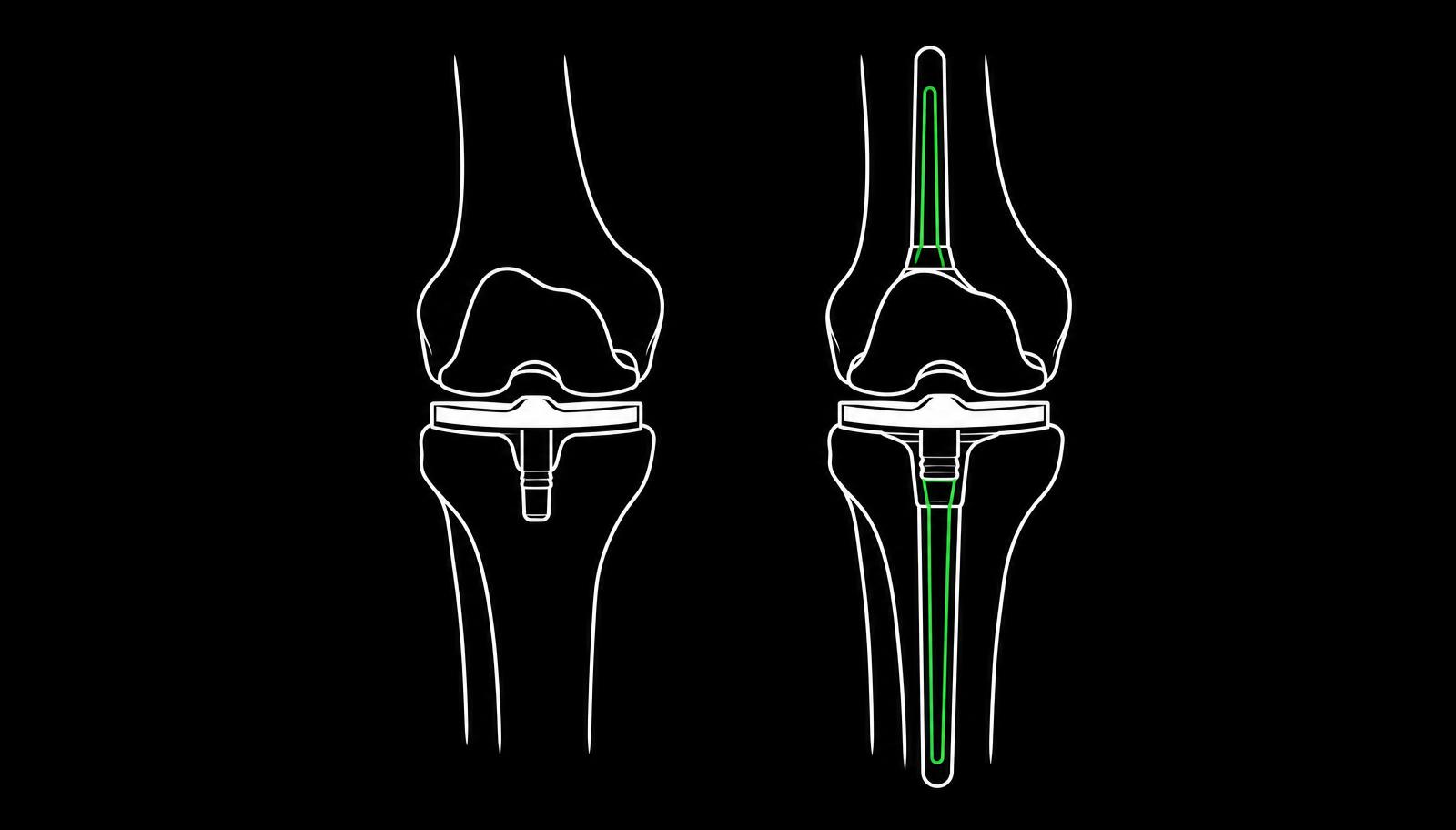
A knee replacement is designed to last many years, and most do. Occasionally one fails, wears out or causes problems that cannot be resolved without further surgery. Revision knee replacement removes some or all of the existing implant and replaces it.
Revision surgery is more demanding than a first, or primary, knee replacement for several reasons. Bone may have been lost around the failing implant and needs rebuilding. Scar tissue from the previous operation makes the anatomy harder to work with. The replacement components used are often larger, with stems that extend into the bone for extra stability, and sometimes with metal augments to make up for missing bone.
Some revisions are partial, replacing only the plastic bearing or a single component. Others replace the entire implant. Which is appropriate depends on why the knee has failed.
Mr John Lynch will explain which type of revision your knee needs after reviewing your X-rays, scans and previous operation records.
Why do knee replacements fail?
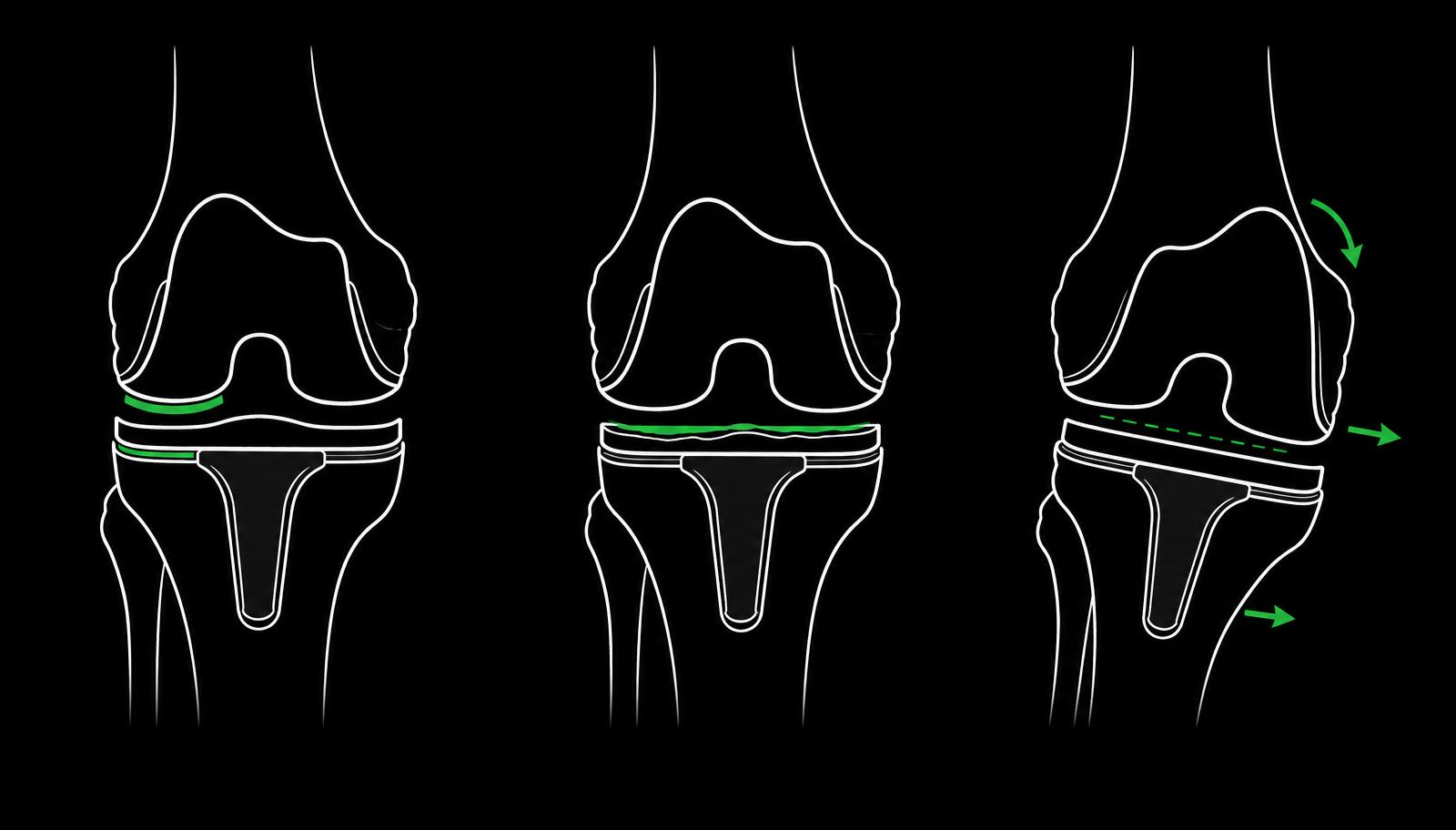
Across the large international joint registries, the most common reasons for revision include infection, loosening of the implant and instability of the joint.
Loosening
Over time an implant can loosen from the bone it is fixed to. This usually causes pain on weight-bearing and a feeling that the knee is not solid.
Infection
Infection can occur soon after the original surgery or years later, sometimes reaching the joint through the bloodstream from elsewhere in the body. It typically causes pain, swelling, warmth and sometimes fever or a discharging wound. Infection is treated differently from other causes of failure and often requires a two-stage procedure.
Instability
If the ligaments supporting the knee are not balanced, or have stretched over time, the knee can feel as though it gives way. This can often be corrected with a revision that uses a more constrained implant.
Wear
The plastic bearing between the components wears gradually with use. In some cases only the bearing needs exchanging. A knee that will not bend or straighten adequately, and has not responded to physiotherapy or manipulation, may benefit from revision.
Fracture around the implant
A break in the bone around a knee replacement, usually after a fall, may require revision surgery to stabilise. Pain without an identifiable cause is the most difficult situation to treat. Revision surgery for unexplained pain has less predictable results, and Mr John Lynch will investigate thoroughly before recommending further surgery. In some cases the honest answer is that revision is unlikely to help.
Who is revision knee replacement suitable for?
Revision may be considered when:
- Your knee replacement is painful and investigations have found a cause
- X-rays or scans show the implant has loosened, worn or fractured
- The knee is unstable or gives way
- There is infection in the joint
- The knee is severely stiff despite physiotherapy
- Bone around the implant has fractured
What Mr John Lynch will need
Revision surgery depends heavily on knowing exactly what is already in your knee. Bring or arrange for the following where possible:
- Records of your original surgery, including the operation note
- Details of the implant used, if known
- Previous X-rays and scans
- Details of any infections or complications since
If these are not available they can usually be obtained, but it is worth starting the process early as it can take time.
Who it is not suitable for
Revision is not always the right answer. If your pain has no identifiable cause, further surgery may not improve it and can make matters worse. If you have significant medical problems, the risks of a long operation may outweigh the likely benefit. If the bone stock is very poor, the options may be limited.
Some problems with a knee replacement are better managed without surgery, and you will be told if that applies to you.
How is revision knee replacement performed?
Revision surgery takes considerably longer than a first knee replacement, and the length varies according to what needs to be done.
The operation is carried out under spinal or general anaesthetic. The anaesthetist will discuss which is right for you.
The previous incision is usually reopened. The existing implant is carefully removed, preserving as much bone as possible. Any damaged or infected tissue is removed. Where bone has been lost, it may be rebuilt using bone graft or metal augments. New components are then fitted, usually with stems that extend further into the thigh bone and shin bone to give additional fixation and stability.
The ligaments are assessed and the implant chosen to match how much support the knee needs. Where ligaments are deficient, a more constrained implant is used, which provides stability through the design of the components themselves.
Two-stage revision for infection
When a knee replacement is infected, the infection has to be cleared before a new implant can be fitted securely. This is often done in two stages.
At the first operation, the infected implant is removed, the joint is thoroughly cleaned, and a temporary spacer containing antibiotics is placed in the knee. You then have a course of antibiotics, often for several weeks, and the infection is monitored.
Once the infection has cleared, a second operation removes the spacer and fits the new implant.
This is a demanding process and the period between operations is difficult, with limited mobility. It is, however, the most reliable way to eradicate infection and give the new implant the best chance.
In some situations a single-stage revision is possible, where the implant is removed and replaced during the same operation. Mr John Lynch will discuss whether this is an option in your case.
What is recovery like?
Recovery from revision knee replacement is slower than from a first knee replacement, and the timescales below are typical rather than promises. Your own recovery will depend on why the knee failed, how much work was needed and your general health.
In hospital
You will stay in hospital longer than after a first knee replacement. Physiotherapy begins early, but you may be restricted in how much weight you can put through the leg, depending on what was done. If bone graft was used, or the bone was fragile, you may need to use crutches for longer.
The first six weeks
Progress is steady rather than rapid. Swelling and bruising are usually more pronounced than after a first replacement. Home exercises, done consistently, matter more here than almost anything else. You will be on blood-thinning medication and your wound will be reviewed regularly.
Six weeks to three months
Walking distance increases and walking aids are gradually reduced, guided by your physiotherapist rather than by the calendar. Driving is usually possible once you can perform an emergency stop comfortably and safely, which takes longer than after a first replacement.
Three to twelve months
Improvement continues over a longer period than after a first knee replacement. Many people are still gaining function at a year, and sometimes beyond.
What to expect from the result
Revision knee replacement is usually very effective at addressing a specific problem such as loosening, instability or infection. It is important to understand that the result is generally less predictable than a first knee replacement. The knee may not bend as far, and some stiffness or discomfort may remain. For most people the aim of revision is a stable, comfortable knee that supports everyday activity, rather than a return to how the knee felt when the first replacement was new.
What are the risks?
Revision knee replacement carries all the risks of a first knee replacement, and the rates are generally higher because the operation is longer and more complex.
Risks include:
- Infection, including recurrence of an infection being treated
- Blood clots in the leg or lungs
- Further loosening or failure of the new implant, requiring another revision
- Fracture of the bone during or after surgery
- Damage to nerves or blood vessels
- Wound healing problems, which are more common where there has been previous surgery
- Ongoing pain or stiffness
- Reduced range of movement compared with before surgery
- Greater blood loss, sometimes requiring transfusion
- Risks associated with a longer anaesthetic
Mr John Lynch will discuss your individual risks with you, based on your health, your history and the condition of your knee.
How long does a revision knee replacement last?
Revision implants are less durable than first knee replacements, because the circumstances are more difficult and the bone supporting them is often compromised.
Research using National Joint Registry data has found that where a knee replacement is revised to a second prosthetic knee, there is around a 20% chance that the second knee will need replacing within thirteen years.
Put another way, most revision knee replacements last well, but the chance of needing further surgery in your lifetime is higher than after a first replacement. This is worth discussing openly at your consultation, particularly if you are younger.
What are the alternatives?
Not every problem with a knee replacement needs revision surgery, and the alternatives depend entirely on the cause.
- Investigation first. Before considering revision, the cause of the problem needs to be identified through examination, X-rays, scans and blood tests. Operating without knowing why a knee hurts rarely helps.
- Physiotherapy. Weakness, stiffness and poor mechanics can cause symptoms that feel like implant failure but respond to rehabilitation.
- Antibiotic treatment. In some circumstances, particularly where an infection is caught very early, antibiotics with a smaller washout procedure may be considered instead of full revision.
- Bracing and pain management. Where surgery is not advisable, symptoms can sometimes be managed without an operation.
- Doing nothing for now. If a knee is loose on X-ray but not causing significant problems, monitoring may be more sensible than operating.
What does revision knee replacement cost?
Revision knee replacement is available on a self-pay basis or through private medical insurance. Costs vary considerably depending on the complexity of the surgery and whether a two-stage procedure is required. Please contact us to discuss fees and which insurers are recognised.