

What is the ACL and what does it do?
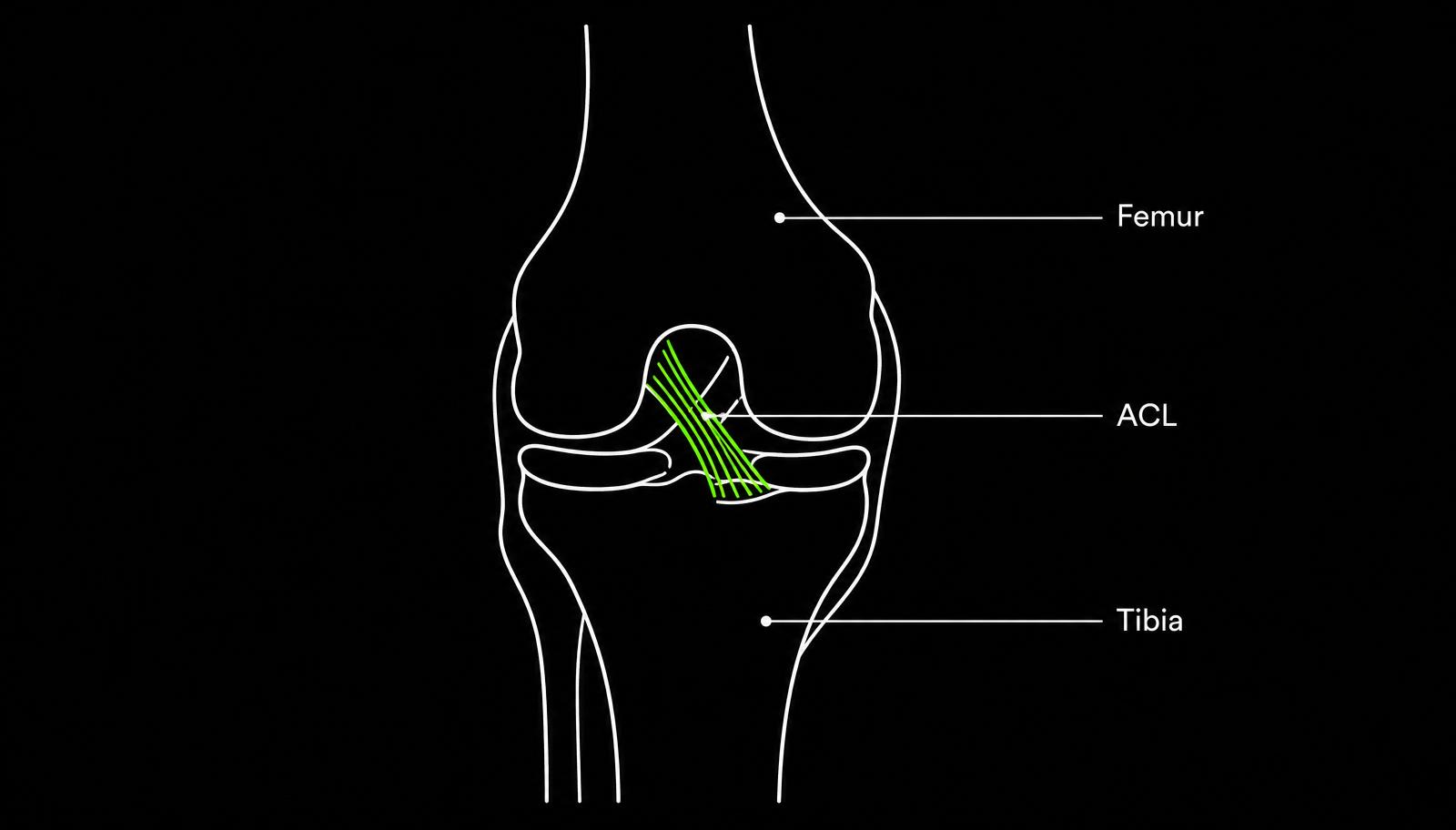
The anterior cruciate ligament runs diagonally through the centre of the knee, connecting the thigh bone to the shin bone. It stops the shin bone sliding forwards and controls rotation. It is what keeps the knee stable when you change direction, land from a jump or pivot on a planted foot.
ACL tears usually happen without contact. A footballer turns sharply, a skier catches an edge, a netball player lands awkwardly. Many people describe hearing or feeling a pop, followed by rapid swelling within a few hours and a knee that feels unreliable.
A torn ACL does not heal back together on its own. The question is not whether it will repair itself, but whether the instability it causes needs surgical treatment in your particular case.
Do I need surgery for an ACL tear?
Not everyone with a torn ACL needs reconstruction. This is one of the more genuinely individual decisions in knee surgery, and it depends less on the scan than on how you use your knee.
Surgery is usually recommended when
- The knee gives way during everyday activity or sport
- You want to return to sports involving twisting, pivoting, cutting or landing, such as football, rugby, netball, skiing or racket sports
- There is another injury needing treatment at the same time, such as a repairable meniscal tear
- Your work is physically demanding or involves uneven ground
- Rehabilitation has not restored a stable knee
Surgery may not be necessary when
- Your knee feels stable in the activities you actually do
- You are happy to modify your sport to avoid pivoting activities
- Physiotherapy has restored good strength and control
- Other medical factors make surgery inadvisable
Some people manage well without an ACL, particularly if they are prepared to give up pivoting sports and commit to rehabilitation. Others find the knee gives way repeatedly, which risks further damage to the cartilage and meniscus over time.
Mr John Lynch will examine your knee, review your scans and discuss what you need your knee to do before recommending an approach. If reconstruction is not the right answer for you, you will be told that plainly.
What are the graft options?
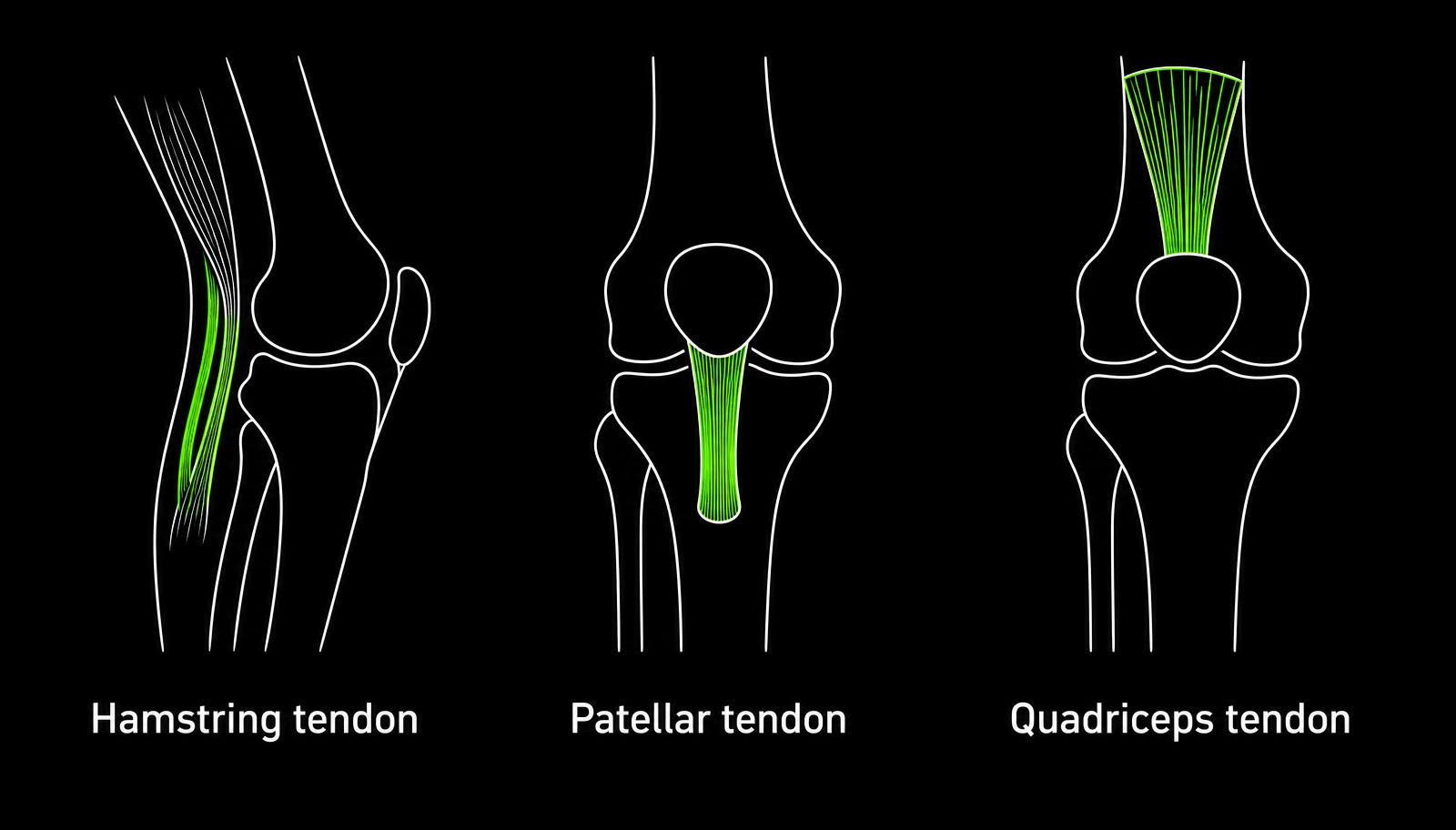
A torn ACL is not stitched back together. It is replaced with a graft, which acts as a scaffold that your body gradually incorporates and remodels into new ligament tissue.
The graft is normally taken from your own body. The main options are:
- Hamstring tendon. Taken from the inner side of the thigh. Widely used, with a small incision at the graft site.
- Patellar tendon. A strip of the tendon below the kneecap, taken with a small block of bone at each end. Often chosen for high-demand athletes. It is associated with a higher rate of kneeling discomfort afterwards.
- Quadriceps tendon. Taken from above the kneecap. Increasingly used, and an option where other graft sites are unsuitable.
Donor tissue, known as an allograft, may occasionally be considered in specific circumstances.
Each graft has advantages and drawbacks, and evidence does not show one to be right for everybody. Mr John Lynch will discuss which is most appropriate for you, taking account of your sport, your job, your age and whether you have had previous surgery.
How is ACL reconstruction performed?
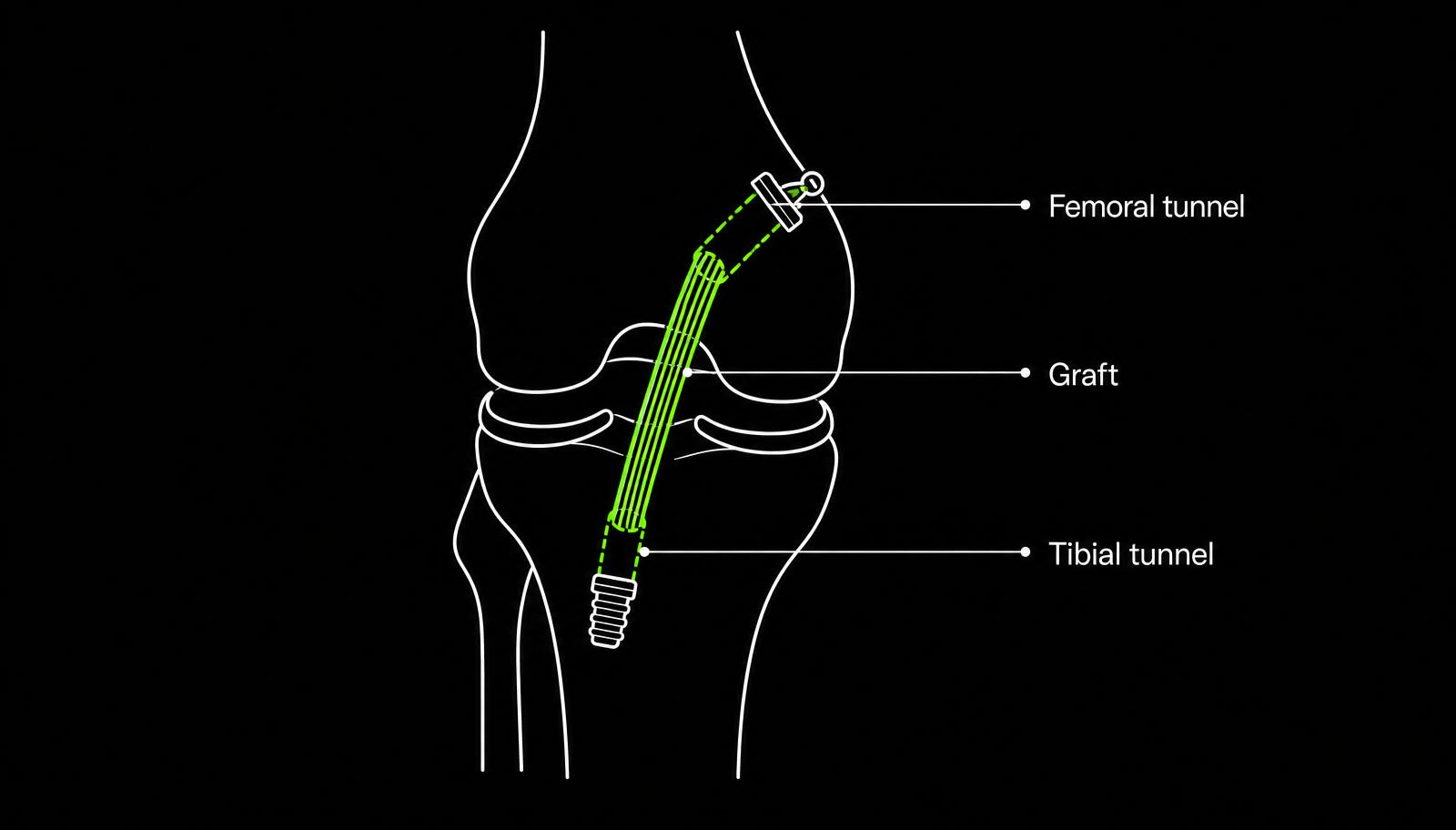
The operation is performed arthroscopically, using keyhole techniques, with a small additional incision to take the graft.
You will have a general anaesthetic, often combined with a nerve block to control pain afterwards. The anaesthetist will discuss this with you beforehand.
A camera is inserted into the knee through a small incision, allowing the whole joint to be inspected. Any associated damage to the meniscus or cartilage is dealt with at the same time. The remnants of the torn ligament are cleared.
The graft is taken and prepared. Tunnels are then drilled through the shin bone and thigh bone, positioned where the original ligament attached. The graft is passed through these tunnels and secured at each end, commonly with screws, buttons or similar fixation devices. The knee is checked through its range of movement to confirm the graft is correctly tensioned and stable.
Most patients go home the same day or the following day.
What is recovery like?
ACL reconstruction is unusual among knee operations in that the surgery is the shorter part of the treatment. The graft needs time to incorporate into the bone and remodel, and the muscles need to be rebuilt. Rehabilitation is what determines the outcome.
The timescales below are typical. Your own progress will depend on your graft, whether anything else was repaired at the same time, and how consistently you rehabilitate.
The first two weeks
This is usually the most uncomfortable period. The focus is on controlling swelling, getting the knee fully straight, and regaining control of the quadriceps muscle. You will use crutches, and you may have a brace depending on what else was done. Straightening the knee fully in these early weeks matters a great deal and is harder to recover later.
Weeks two to six
Crutches are gradually discarded. Bending improves and walking normalises. Physiotherapy focuses on restoring range of movement and beginning to load the leg. If a meniscal repair was carried out at the same time, your weight-bearing and bending may be restricted for longer.
Six weeks to three months
Strength work becomes the priority. Static cycling, controlled gym work and progressive loading. Most people return to desk work well before this point and to more physical work during this period, though this varies.
Three to six months
Running is usually reintroduced during this phase, once strength and movement control allow it, rather than at a fixed date. Straight-line running comes before changes of direction.
Six to nine months
Sport-specific work begins. Cutting, pivoting, jumping and landing drills, progressing towards the demands of your sport.
Nine to twelve months and beyond
Return to competitive pivoting sport typically takes nine to twelve months. Research has found that delaying return to sport, up to around nine months, substantially reduces the risk of a further knee injury. Return should be based on passing strength and function testing rather than on the date in the calendar.
What the evidence says about returning to sport
Around 81% of people return to some form of sport after ACL reconstruction, around 65% return to their previous level, and around 55% return to competitive sport. These figures are worth knowing in advance. ACL reconstruction is a reliable operation for restoring stability, but returning to the same level of competitive sport is not guaranteed, and the outcome depends heavily on rehabilitation.
What are the risks?
ACL reconstruction is a common and well-established operation, but complications do occur.
- Graft failure or re-rupture, requiring revision surgery
- Injury to the ACL in the opposite knee
- Stiffness or loss of full movement, particularly loss of full extension
- Ongoing pain at the graft site, especially kneeling discomfort with a patellar tendon graft
- Persistent weakness of the quadriceps or hamstrings
- Infection
- Blood clots in the leg or lungs
- Numbness around the incisions, often permanent
- Damage to nerves or blood vessels
- Later development of arthritis in the knee, which is influenced by the original injury as well as by surgery
- Risks associated with anaesthesia
Across published research, the risk of re-injury after ACL reconstruction is around 15%, split roughly evenly between the reconstructed knee and the opposite knee. This rises to around 23% in athletes under twenty-five who return to sport.
Age, sport and how well rehabilitation is completed all affect these risks. Mr John Lynch will discuss your individual position with you.
What are the alternatives?
Rehabilitation without surgery. A structured physiotherapy programme to build strength and control. This suits people whose knee is stable in the activities they want to do, and those willing to avoid pivoting sports. It is a legitimate choice, not simply a delaying tactic.
Activity modification. Changing to sports that load the knee in straight lines, such as cycling, swimming, rowing or running, rather than sports involving cutting and pivoting.
Bracing. A functional brace may help some people feel more confident, though it does not replace a torn ligament.
Delayed surgery. Some people begin with rehabilitation and proceed to surgery only if the knee continues to give way. This is a reasonable approach in many cases, though repeated episodes of giving way can cause further damage inside the knee.
Where a meniscal tear needs repairing, or where the knee is giving way regularly, earlier surgery is generally advised.
What does ACL reconstruction cost?
ACL reconstruction is available on a self-pay basis or through private medical insurance. Please contact us for current fees, to discuss what is included, and to check which insurers are recognised. Rehabilitation is a significant part of the treatment, so it is worth establishing at the outset how much physiotherapy is covered.
Book a consultation
To arrange an appointment, please call us or use the enquiry form.