

What is a knee replacement?
The knee is where the thigh bone meets the shin bone, with the kneecap sitting at the front. All three surfaces are covered in cartilage, which lets the joint move smoothly. Arthritis wears that cartilage away. Once it has gone, bone rubs against bone, which is what causes the pain, swelling and stiffness.
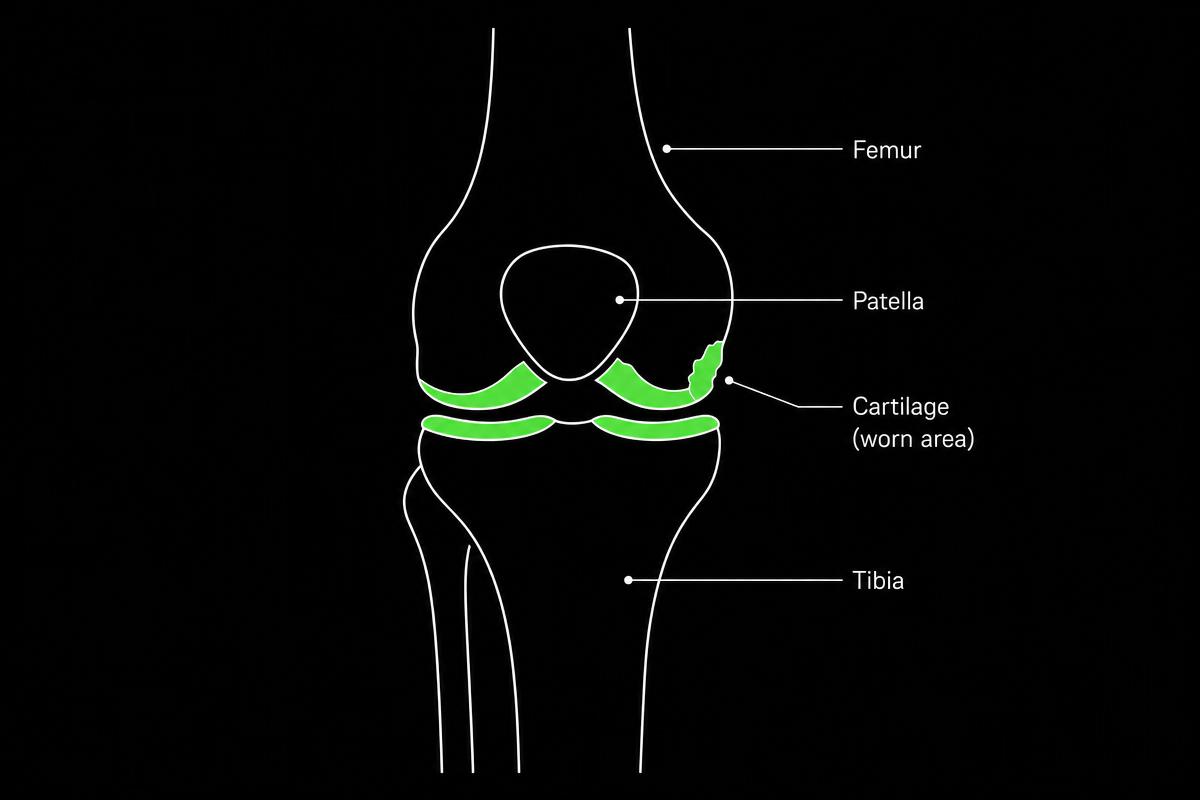
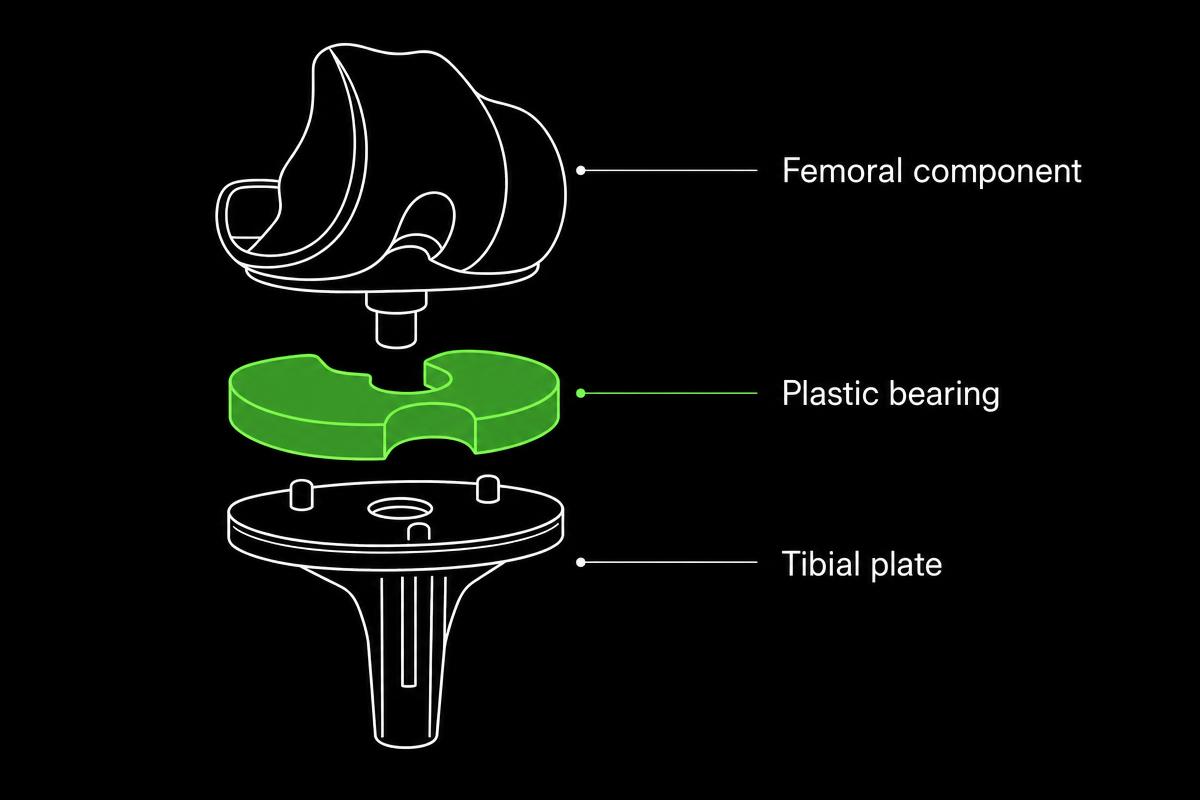
A knee replacement resurfaces the worn areas. The damaged surfaces are removed and replaced with a metal cap on the thigh bone, a metal plate on the shin bone, and a plastic bearing between them that acts as the new cartilage. The kneecap may also be resurfaced.
There are two main types.
Total knee replacement resurfaces the whole joint. This is the more common operation and suits people with arthritis affecting more than one part of the knee.
Partial, or unicompartmental, knee replacement resurfaces only the worn section, leaving healthy bone and ligaments intact. Recovery tends to be quicker, but it is only suitable when the arthritis is confined to one compartment.
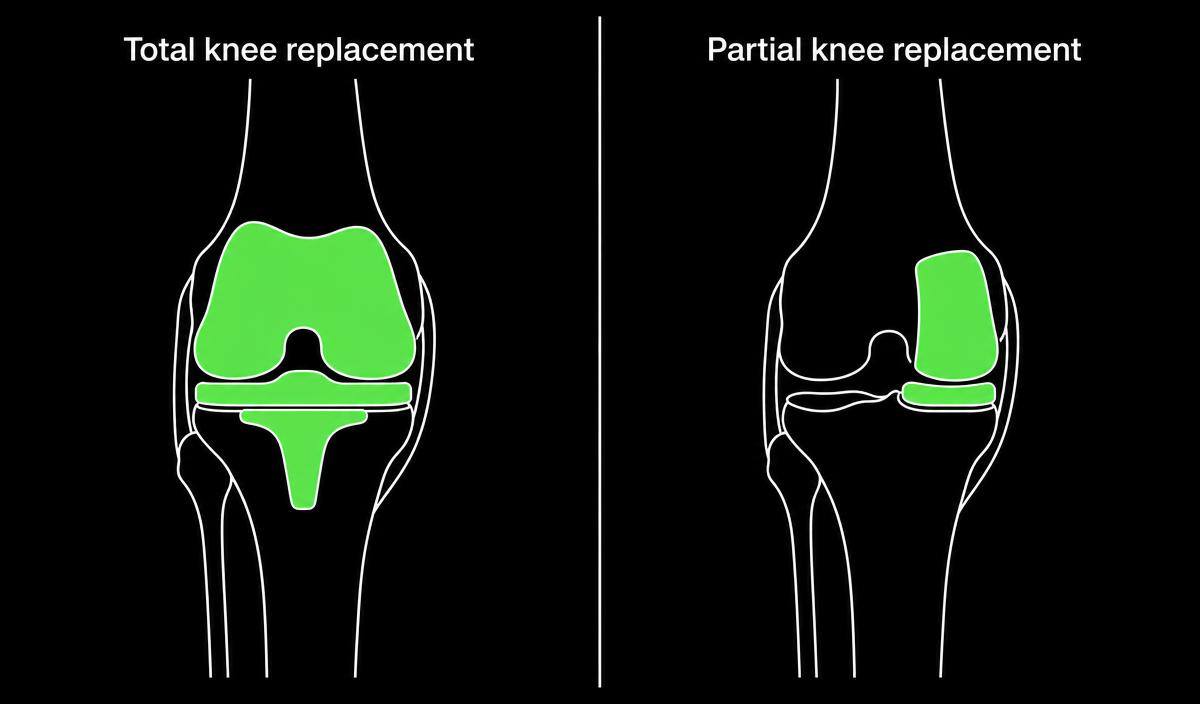
Mr John Lynch will advise which is appropriate after examining you and reviewing your X-rays.
Who is knee replacement suitable for?
Knee replacement is usually considered when:
- Knee pain limits everyday activities such as walking, stairs, or getting out of a chair
- Pain wakes you at night or continues at rest
- Painkillers, physiotherapy and injections are no longer controlling symptoms
- X-rays confirm significant joint damage
- The pain is affecting your independence, work or quality of life
Who it is not suitable for
Knee replacement is not the right answer for everyone, and part of a consultation is establishing whether it is right for you.
It may not be appropriate if your arthritis is mild or early, if your pain is coming from somewhere other than the joint surfaces, if you have an active infection, or if your knee is stable and still functioning reasonably well. Certain medical conditions increase the risks of surgery to the point where the balance no longer favours operating.
Weight, smoking and diabetes control all affect the outcome and the complication rate. If any of these apply, Mr John Lynch may recommend addressing them first. This is not to delay treatment, but because it materially improves the result.
If surgery is not right for you now, you will be told that plainly.
How is a knee replacement performed?
Most knee replacements in the UK are carried out under spinal anaesthetic, which numbs you from the waist down, usually with sedation so that you are relaxed and unaware. General anaesthetic is an alternative. The anaesthetist will discuss which is right for you before the day of surgery.
An incision is made down the front of the knee. The worn surfaces of the thigh bone and shin bone are removed with precise cuts, and the replacement components are fitted, usually secured with bone cement. A plastic bearing is inserted between them. The kneecap is resurfaced if needed. The ligaments around the knee are preserved and balanced so that the joint moves and feels stable.
The wound is then closed and dressed, and you are taken to the recovery area.
What is recovery like?
This is the part most people want to know about, so here it is in detail. Everyone recovers at a slightly different pace, and these are typical timescales rather than promises.
Day of surgery
You will be encouraged to stand and take a few steps, usually within hours. Early movement reduces the risk of blood clots and stiffness. A physiotherapist will start you on gentle exercises.
The first few days
You will walk with crutches or a frame, and practise stairs before you go home. Pain is managed with a combination of medications. Swelling and bruising are normal and often extend down the shin. Most people go home once they can walk safely, manage stairs, and their pain is controlled with tablets.
Weeks one to two
Home exercises several times a day are the single most important factor in your result. The knee will be swollen, stiff and sore, and sleep is often disturbed. This is normal and it improves. Your wound will be reviewed at around two weeks. You will be taking blood-thinning medication to reduce the risk of clots.
Weeks two to six
Walking distance increases and crutches are usually discarded during this period. Outpatient physiotherapy continues. Most people can drive again at around six weeks, once they can perform an emergency stop comfortably. Check your insurance policy, as many insurers ask to be informed. Desk-based work is often possible from four to six weeks. Physical work usually takes three months or more.
Weeks six to twelve
Bending should reach a functional range. Everyday activities become straightforward. Swelling reduces but often persists to some degree, particularly at the end of the day.
Three to twelve months
Improvement continues gradually. Most of the benefit is felt by three months, but knees keep improving for up to a year and sometimes longer. Some numbness on the outer side of the scar is common and usually permanent. It is a nuisance rather than a problem.
What it will not do
A replaced knee is not a normal knee. It should be far less painful and far more functional, but it may feel different, it may click, and it may not bend as far as your original knee did. Kneeling is often uncomfortable. Most people consider this a fair trade for the pain relief.
What are the risks?
Knee replacement is a common and well-established operation, but it is major surgery and complications do happen. You should understand these before consenting.
More common:
- Ongoing pain or stiffness. A minority of people are not satisfied with their result even when the replacement is technically sound
- Swelling that persists for months
- Numbness around the scar, usually permanent
- Difficulty kneeling
Less common but more serious:
- Infection, which may require further surgery and, rarely, removal of the implant
- Blood clots in the leg or lungs. Blood-thinning medication and early mobilisation reduce this risk
- Damage to nerves or blood vessels
- Fracture around the implant during or after surgery
- Stiffness requiring a manipulation under anaesthetic
- Loosening or wear of the implant over time, requiring revision surgery
- Risks associated with anaesthesia
Mr John Lynch will discuss your individual risk with you. This depends on your age, weight, general health and the condition of your knee.
How long does a knee replacement last?
Modern knee replacements are durable. Data from the National Joint Registry, which records nearly every joint replacement performed in England, Wales and Northern Ireland, shows that around 96.7% of total knee replacements are still in place at ten years, and 95.4% at fifteen years. Partial knee replacements have a higher revision rate, at approximately 89.8% at ten years.
Pooled long-term research suggests that around 82% of total knee replacements last more than twenty-five years.
Younger and more active patients wear implants faster and have a higher chance of needing revision surgery in their lifetime. If you are under sixty, this is worth discussing in detail at your consultation.
What are the alternatives?
Surgery is not the first step. Most people should try the following before considering a replacement.
- Physiotherapy and exercise. Strengthening the muscles around the knee reduces load on the joint and can significantly improve pain and function.
- Weight management. Reducing load through the knee has a direct effect on symptoms, and improves surgical outcomes if you do go on to have surgery.
- Pain relief. Paracetamol, anti-inflammatories and topical treatments, used under guidance.
- Steroid injections. These can give useful relief for weeks to months. They are not a long-term solution, but they are valuable for managing symptoms or delaying surgery.
- Walking aids and bracing. A stick used in the opposite hand reduces load meaningfully.
- Partial knee replacement, if the arthritis is confined to one compartment.
If these have been tried without lasting benefit, and the arthritis is advanced, replacement becomes the reasonable next option.
What does knee replacement surgery cost?
Knee replacement is available on a self-pay basis or through private medical insurance. Please contact us for current fees and to discuss which insurers are recognised.