

What are knee injections for?
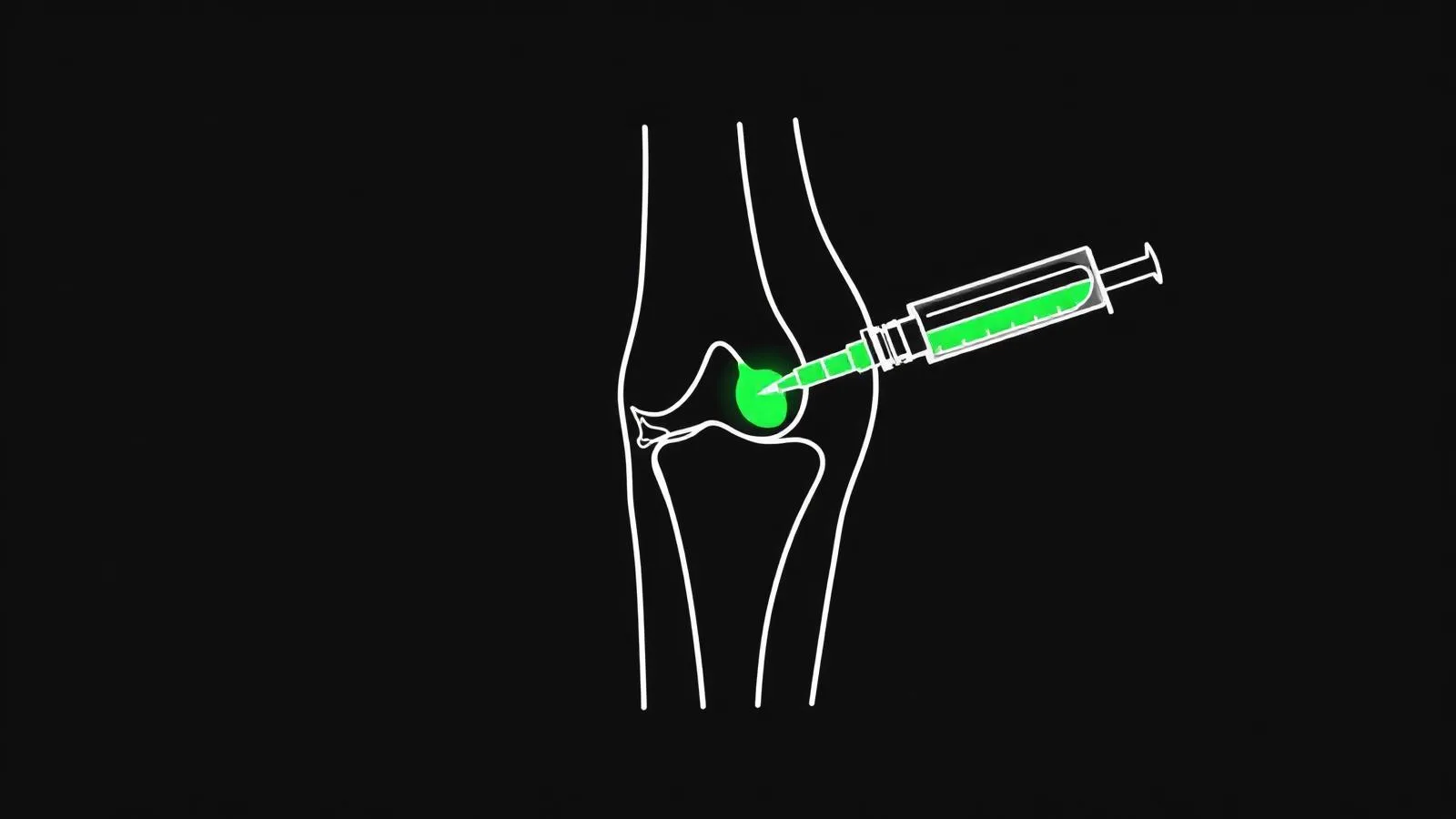
An injection places medication directly into the knee joint, or into a specific structure around it. Because the medication goes where it is needed, a smaller dose can be used than with tablets, and side effects elsewhere in the body are reduced.
Injections are generally used for one of three reasons.
To control pain and inflammation, where symptoms are limiting daily life and other measures have not been enough.
To allow rehabilitation to begin. Pain can prevent someone doing the exercise that would improve their knee. Settling that pain creates a window in which physiotherapy becomes possible. This is often the most valuable use of an injection.
To help with diagnosis. Where it is unclear whether pain is coming from inside the joint or from a structure around it, the response to a targeted injection can help clarify the source.
What an injection will not do
This is worth stating plainly, because expectations are often higher than the treatment can meet.
An injection does not repair a torn meniscus, regrow cartilage or reverse arthritis. It treats symptoms, not the underlying condition. Relief is usually temporary, and symptoms return when the effect wears off.
An injection is not a substitute for exercise, weight management or the other measures that make a lasting difference to an arthritic knee. It works best when used to enable those things rather than instead of them.
What types of injection are available?
Corticosteroid injection
The most commonly used knee injection. A steroid, usually combined with local anaesthetic, is injected into the joint to reduce inflammation.
The local anaesthetic often gives immediate relief lasting a few hours. The steroid takes a few days to take effect.
NICE advises that corticosteroid injections may be considered for osteoarthritis when other treatments are ineffective or unsuitable, or to support therapeutic exercise, and that patients should be told the relief is short-term, in the range of two to ten weeks.
Some people get considerably longer benefit than that, and some get very little. Repeated injections into the same joint are generally limited, as frequent steroid use may have adverse effects on cartilage.
Hyaluronic acid injection
Also known as viscosupplementation. Hyaluronic acid is a component of normal joint fluid, and these injections aim to improve lubrication within the joint.
The evidence is contested and UK guidance is clear. NICE recommends that intra-articular hyaluronan injections should not be offered to manage osteoarthritis, having found insufficient evidence of meaningful benefit in pain, function or quality of life, alongside cost-effectiveness considerations.
Some clinicians and international bodies take a different view, and these injections continue to be used in private practice. If hyaluronic acid is discussed with you, you should be told what the UK guidance says so that you can make an informed choice.
Platelet-rich plasma
A sample of your blood is taken and spun in a centrifuge to concentrate the platelets, which are then injected into the knee.
Interest in this treatment is considerable, but the evidence remains limited. A large network meta-analysis of intra-articular treatments for knee and hip osteoarthritis found that no injection treatment produced a clinically meaningful improvement in pain or function compared with placebo at three to six months, with corticosteroid providing short-term relief that typically waned after four to six weeks, and hyaluronic acid and platelet-rich plasma showing inconsistent and modest effects that were not sustained.
Platelet-rich plasma is not currently recommended by NICE for routine treatment of knee osteoarthritis. It should be presented as a treatment where the evidence is still developing rather than as an established one.
Arthrosamid
Arthrosamid is an injectable gel used to treat pain from knee osteoarthritis. It is made of polyacrylamide hydrogel, which is water and a stable, non-biodegradable polymer. It is injected into the knee joint, usually as a single treatment.
The gel is thought to integrate into the lining of the joint, which helps cushion the joint and reduce pain and stiffness. Unlike steroid or hyaluronic acid injections, which tend to wear off within weeks or months, Arthrosamid is designed to give longer-lasting relief, and studies have reported benefits lasting a year or more for many people.
It is generally suited to people with mild to moderate knee osteoarthritis who haven't found enough relief from other treatments. Common side effects include temporary pain, swelling or stiffness at the injection site. Less commonly, joint infection or inflammation can occur.
Arthrosamid is not currently available on the NHS, so it must be arranged privately.
Injections around the knee
Not all injections go into the joint itself. Pain arising from a specific tendon, bursa or nerve may be treated with a targeted injection to that structure, sometimes under ultrasound guidance.
What happens during the procedure?
The injection is given in a clinic room and takes only a few minutes.
Your knee is examined to confirm the diagnosis and identify the correct injection site. The skin is cleaned thoroughly. In some cases ultrasound is used to guide the needle accurately, particularly for structures around the joint.
The injection itself is usually described as briefly uncomfortable rather than painful. If there is a large amount of fluid in the knee, some may be drawn off first, which often relieves pressure and discomfort in itself.
Afterwards a small dressing is applied. You can walk out and, in most cases, drive home, although you may prefer to arrange a lift for the first one.
What happens afterwards?
Rest the knee for the first day or two, avoiding strenuous activity and heavy loading.
With a steroid injection, some people notice increased pain for a day or two before it settles. This is common and not a sign that something has gone wrong. It usually responds to ice and simple pain relief.
Once symptoms have settled, use the window the injection provides. Begin or resume physiotherapy, build strength, and increase activity gradually. An injection that is used to enable rehabilitation achieves considerably more than one that is not.
Mr John Lynch will advise on timescales for returning to specific activities.
What are the risks?
Knee injections are generally safe, but they are not without risk.
- Increased pain for a day or two afterwards, particularly with steroid
- Infection in the joint. This is rare but serious, and requires urgent treatment
- Bleeding or bruising at the injection site
- Thinning or lightening of the skin at the injection site, which can be permanent
- Reduction in the effectiveness of repeated steroid injections over time
- Possible adverse effects on cartilage with frequent steroid injections
- A temporary rise in blood sugar, which matters if you have diabetes
- Facial flushing for a day or two
- Allergic reaction, which is rare
Seek urgent medical advice if your knee becomes increasingly painful, hot and swollen in the days after an injection, or if you develop a fever. Infection in a joint needs treating quickly.
How often can I have injections?
Steroid injections into the same joint are usually spaced several months apart, and there is generally a limit on how many are given, because repeated use may affect the cartilage and because the benefit often reduces with each one.
If an injection gives good but short-lived relief, and the pattern repeats, that is usually a sign that the underlying problem needs addressing rather than that more injections are the answer.
Mr John Lynch will discuss how injections fit into your overall treatment rather than treating them as an isolated intervention.
What are the alternatives?
Exercise and physiotherapy. The most effective non-surgical treatment for most knee problems, and the one with lasting benefit. Strengthening the muscles around the knee reduces load on the joint.
Weight management. Reducing load through the knee has a direct and measurable effect on symptoms.
Pain relief and anti-inflammatory medication. Taken by mouth or applied to the skin, under guidance.
Activity modification and walking aids. A stick used in the opposite hand meaningfully reduces load through an arthritic knee.
Surgery. Where a specific problem is identified and symptoms justify it. For advanced arthritis, joint replacement offers lasting relief where injections offer temporary relief.
What do knee injections cost?
Injection treatments are available on a self-pay basis or through private medical insurance. Costs vary by the type of injection and whether ultrasound guidance is used. Please contact us for current fees and to check which insurers are recognised. Insurers do not always cover every type of injection, so it is worth confirming before booking.
Book a consultation
To arrange an appointment, please call us or use the enquiry form.