
Surgical technique
Meniscus: Repair Whenever We Can
19 February 2026 · 8 min read
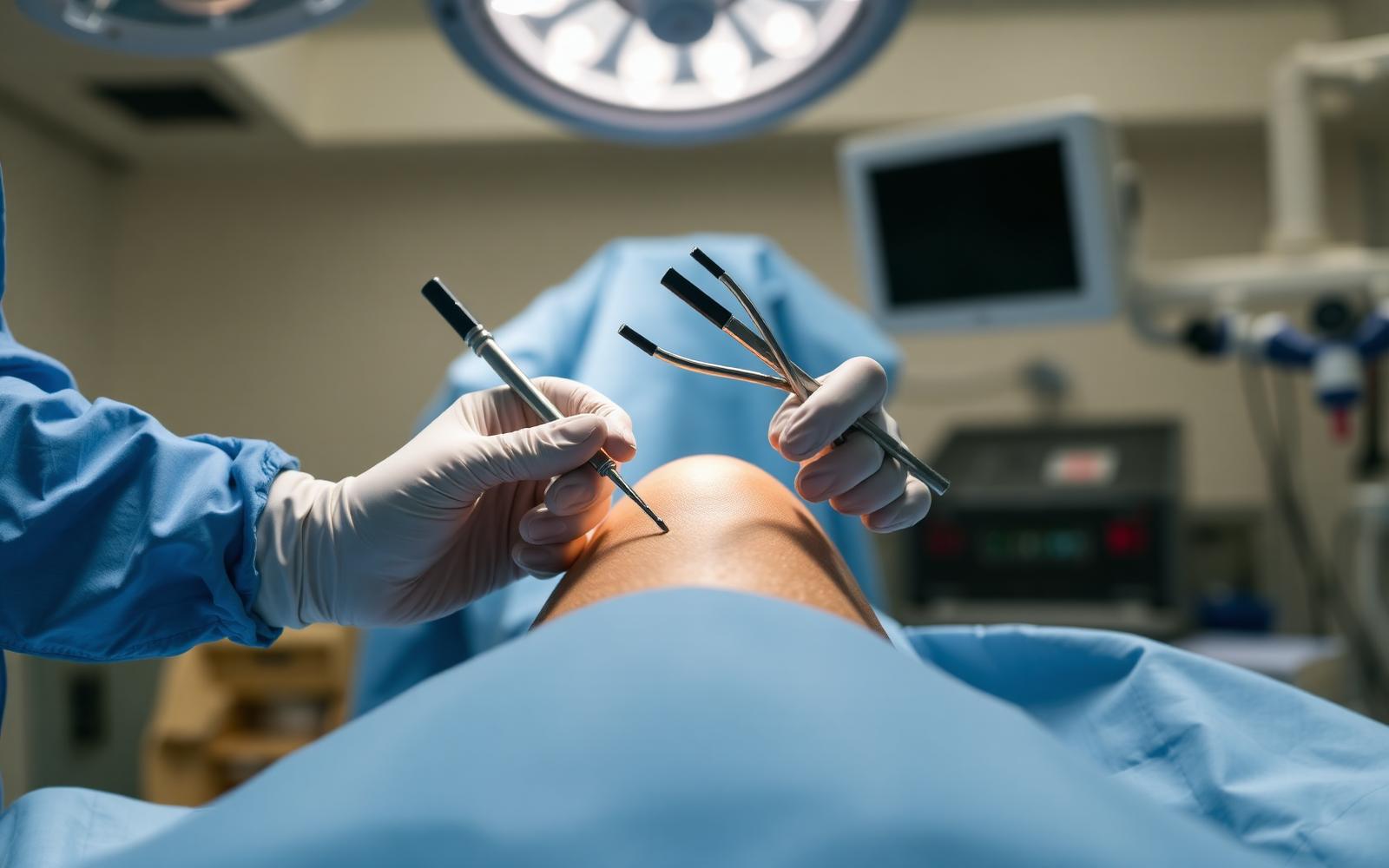
If you have a torn meniscus, one of your first questions may be: “Can it be repaired?”
Meniscus repair surgery aims to retain the knee's cushioning tissue while allowing a suitable tear to heal. When an operation is needed, preserving functional meniscus is an important treatment principle.1
“Repair whenever we can” means considering whether the tissue can be preserved safely and usefully. The decision depends on the tear, the knee's condition and your goals.
What is the meniscus, and why does it matter?
Each knee has two menisci: the medial meniscus on the inner side and the lateral meniscus on the outer side. These crescent-shaped structures sit between the thighbone and shinbone.
They help absorb shock, distribute forces and support stability when you walk, run or turn. A meniscus tear can cause pain, swelling, catching or difficulty moving the knee.2
Keeping useful meniscal tissue is therefore about the knee's future function as well as today's symptoms. Repair offers a way to preserve tissue in appropriate cases, although it cannot guarantee that arthritis will never develop.1
Does every torn meniscus need surgery?
No. A tear on a scan does not automatically mean you need an operation.
Degenerative meniscus tears develop as the tissue changes over time. For these, treatment usually starts with non-surgical care, including physiotherapy. A structured assessment is needed before considering arthroscopic surgery, particularly if osteoarthritis is also present.
An MRI finding must be considered alongside your symptoms and examination. Pain may come from other changes in the knee rather than the tear alone.3
Some acute, displaced tears need earlier attention, especially when they restrict knee movement. The appropriate approach depends on the diagnosis.1
Which meniscus tears can be repaired?
Your surgeon considers the tear's shape, position and tissue quality. Potentially repairable patterns include longitudinal tears, some displaced bucket-handle tears, and selected radial or root tears. These patterns need different assessments and repair methods.4
Blood supply also matters. The outer part of the meniscus has a better blood supply than the inner part, which generally gives it greater healing potential.2
However, blood supply is one part of the decision. A tear in an inner zone is not automatically beyond repair. Your surgeon weighs the whole injury, including whether the tissue can be brought together and held securely.4
Significant cartilage wear or arthritis can make repair less suitable. Stitching the meniscus does not treat the underlying worn joint surfaces.6
How is the knee assessed before meniscus repair?
Assessment starts with the history of your injury, your symptoms and a physical examination. Tell your surgeon about episodes of swelling, catching, giving way or an inability to straighten the knee.
For an acute isolated meniscus tear, MRI is the preferred imaging test. Your clinician will decide which investigations are appropriate for you.1
Before surgery, discuss the intended operation and the alternatives if the tissue proves unsuitable for repair.
Surgical technique: how is a meniscus repaired?
Meniscus repair is usually performed using knee arthroscopy. A small camera gives the surgeon a view inside the joint through small incisions. Instruments are introduced to examine and treat the injury.5
The aim is to bring suitable torn tissue together and secure it with sutures, or stitches. These hold the repair while biological healing takes place. The method depends on where the tear lies and how it can be reached.6
Inspecting and securing the tear
The surgeon examines the tear directly and uses a probe to assess the damaged tissue. This helps confirm whether repair is feasible. Stitch placement and the number of sutures are selected to stabilise the tear and hold the tissue together.7
All-inside meniscus repair
An all-inside repair uses instruments introduced through the arthroscopy openings to place a suture construct within the knee. It can be used for suitable tears in the back or body of the meniscus.6
Inside-out meniscus repair
In an inside-out repair, sutures pass from within the joint to the outside of its capsule. A separate incision allows the surgeon to retrieve and tie the sutures securely. This can be used for suitable tears in the body or back of the meniscus.6
Outside-in meniscus repair
An outside-in technique passes needles and sutures from outside the knee into the joint. It is particularly useful for tears towards the front of the meniscus, where access with other methods can be difficult.
The stitch pattern and placement are chosen to hold the tear together. The direction of passage describes the technique; it does not, by itself, tell you which repair is best for your injury.7
Repairing a radial tear
A radial tear cuts across fibres that help the meniscus carry load. For suitable tears, sutures bring the separated edges together to restore continuity. Repair may use an inside-out approach or another method suited to the location and tear pattern.13
What is a meniscus root repair?
The meniscal roots attach the meniscus to the shinbone. Damage to a root can compromise the meniscus's ability to distribute load, even when much of its tissue remains present.
A meniscus root repair aims to restore this attachment. One approach passes sutures through the torn root and through a small tunnel in the shinbone, securing them to hold the tissue at its attachment site. Another approach uses a suture anchor for direct fixation.
These procedures address a different problem from simply stitching the edges of a tear together. Your surgeon should explain the proposed fixation method and why it suits the injury.8
What happens if the meniscus cannot be repaired?
Some tears have damaged tissue that cannot be repaired reliably.
If surgery is appropriate, a limited partial meniscectomy may be considered. This removes the unsuitable torn portion while retaining useful tissue. For traumatic tears, international guidance recommends considering this when repair or appropriate preservation without repair is not possible.4
Ask what will be preserved and what the operation is expected to achieve. Understanding the reason for trimming helps you weigh the options.
What does recovery after meniscus repair involve?
Meniscus repair recovery needs to protect the healing tissue while rebuilding knee function. Instructions vary with the tear and the operation performed.
You may need crutches, restrictions on weight-bearing or limits on knee bending. A brace may be prescribed. Radial and root repairs often need more protective early rehabilitation than some stable longitudinal repairs.
Physiotherapy progresses through protection, restoration of movement and strength, and preparation for more demanding activity. Your team will assess swelling, movement, muscle function and control as you progress.9
Before leaving hospital, make sure you understand how to walk, which exercises to do and when to attend follow-up. Ask for the plan in writing and share it with your physiotherapist.
When can you return to sport after meniscus repair?
The EU–US meniscus rehabilitation consensus recommends a 6–9 month return-to-sport timeframe after meniscus repair, alongside assessment of recovery. This is a planning guide, and individual timing varies.
Readiness includes knee movement, swelling, strength, coordination and confidence. The demands of your sport and any accompanying injuries also matter. Sport-specific rehabilitation helps prepare you for the movements you will face.10
If you also have ACL reconstruction, the combined rehabilitation plan may delay return further. Follow the advice for both procedures.9
What are the risks of meniscus repair surgery?
Possible complications include infection, blood clots, stiffness and injury to nearby nerves or blood vessels. The repair may fail to heal or tear again, and further surgery may be needed.6
Discuss your personal risks, the likely benefits and the alternatives before deciding. You should also understand what the next steps would be if symptoms persist.
Questions to ask your knee surgeon
- What type of meniscus tear do I have?
- Could physiotherapy help without surgery?
- Can the tear be repaired, and what affects its healing potential?
- Which surgical technique would you consider, and why?
- What would you do if repair is not possible?
- Does cartilage wear or an ACL injury change the plan?
- Will I need crutches or a brace?
- What should I expect for work, driving and sport?
Frequently asked questions about meniscus repair
Am I too old for meniscus repair?
Age alone does not decide whether a traumatic tear can be repaired. Tissue degeneration and the injury itself need to be considered. Ask for an assessment rather than assuming your age rules out repair.4
Does a meniscus tear on MRI mean I need an operation?
No. The scan is part of the assessment. Particularly with degenerative tears, the finding may not explain all your pain, and non-surgical treatment is generally the first approach.3
Can I walk normally straight after a repair?
It depends on the repair. Some allow earlier weight-bearing; others require restrictions. Follow your own team's instructions before increasing walking or knee bending.9
Discuss meniscus repair with John Lynch
If knee pain or a meniscus injury is limiting your activities, a consultation can help you understand the diagnosis and treatment choices.
Book a consultation with John Lynch to discuss whether non-surgical care, meniscus repair or another approach may be appropriate for your knee.
When to seek urgent medical advice
Get an urgent GP appointment or contact NHS 111 if you cannot bend or straighten the knee, cannot put weight on it, or have knee pain with a hot, swollen joint or a high temperature.11
After surgery, contact your hospital team or NHS 111 for severe or increasing pain, worsening swelling or redness, fever, wound discharge, or new numbness or tingling.5
New calf pain and swelling need urgent assessment. If leg pain and swelling occur with chest pain or breathlessness, call 999 or go to A&E immediately.12
This article provides general information. Your surgeon and rehabilitation team should guide individual treatment and recovery decisions.
Clinical sources
- American Academy of Orthopaedic Surgeons. Management of Acute Isolated Meniscal Pathology: Evidence-Based Clinical Practice Guideline. 2024. Applies to acute isolated injuries; excludes root, chronic/degenerative and associated ligament injuries.
- Mersey Care NHS Foundation Trust. Meniscal tear.
- Beaufils P et al. Surgical management of degenerative meniscus lesions: the 2016 ESSKA meniscus consensus. Published 2017. DOI: 10.1007/s00167-016-4407-4.
- Kopf S et al. Management of traumatic meniscus tears: the 2019 ESSKA meniscus consensus. Published 2020. DOI: 10.1007/s00167-020-05847-3.
- NHS. Arthroscopy. Reviewed 7 September 2026.
- American Academy of Orthopaedic Surgeons. Meniscus Repair.
- Menge TJ et al. Anterior Horn Meniscal Repair Using an Outside-In Suture Technique. Arthroscopy Techniques. 2016. Technical note. DOI: 10.1016/j.eats.2016.06.005.
- Woodmass JM et al. Medial Meniscus Posterior Root Repair Using a Transtibial Technique. Arthroscopy Techniques. 2017. Technical note. DOI: 10.1016/j.eats.2016.11.006.
- Pujol N et al. The formal EU–US Meniscus Rehabilitation 2024 Consensus: An ESSKA–AOSSM–AASPT initiative. Part I: Rehabilitation management after meniscus surgery (meniscectomy, repair and reconstruction). Published 2025. DOI: 10.1002/ksa.12674.
- Prill R et al. The 2024 Formal EU–US Meniscus Rehabilitation Consensus: An ESSKA–AOSSM–AASPT Initiative: Part II: Prevention, Non-Operative Treatment, and Return to Sport. International Journal of Sports Physical Therapy. 2025;20(7):1097–1106. DOI: 10.26603/001c.140661.
- NHS. Meniscus tear (knee cartilage damage). Reviewed 2 September 2026.
- NHS. DVT (deep vein thrombosis).
- Pareek A et al. Inside-Out Repair for Radial Meniscus Tears. Arthroscopy Techniques. 2016. Technical note. DOI: 10.1016/j.eats.2016.03.007.